Grayson County Feral Hog Control: What the New USDA Money Means
Grayson County feral hog control is not part of the new federal push, but the county right next door is. On Nov. 6, 2026, the USDA’s Natural Resources Conservation Service announced $6.3 million for four Texas feral hog projects, and three of them, run by the Texas State Soil and Water Conservation Board, cover nine counties that include Fannin County, Grayson’s neighbor to the east (NRCS Texas). Grayson County is not on the list. For landowners in Gunter, Howe, Denison and the rest of the county, the help available today is the same as before: the Grayson County AgriLife Extension office in Sherman, Texas Wildlife Services, and Texas rules that make it easy to hunt and trap hogs on private land.
Chron reported the funding for a statewide audience on Nov. 15. Below is what the money actually pays for, why the Fannin County project matters to this side of the county line, and where Grayson County landowners and homeowners can turn now. If hogs are already tearing up your place, our earlier look at why wild hogs are moving into Howe and Gunter explains how growth is pushing them toward the rural edge.
What the USDA feral hog money pays for
The Texas money is part of a larger round. USDA says it awarded $51.9 million to 29 projects in 13 states through the Feral Swine Eradication and Control Pilot Program, which is part of a broader $105 million investment shared by NRCS and the agency’s Animal and Plant Health Inspection Service (APHIS) (USDA NRCS). Texas received four of those projects:
- Three Texas State Soil and Water Conservation Board (TSSWCB) projects in Baylor, Brown, Coleman, Fannin, Haskell, Knox, Lamar, Runnels and Red River counties. The goal, in USDA’s words, is to knock hog numbers down to a level that “trained and equipped local landowners” can keep under control.
- One White Buffalo, Inc. project in Sherman County, in the Texas Panhandle. Despite the name, that is not Sherman, the Grayson County seat. That project is meant to confirm whether feral hogs remain in that county, remove any that do, and document a method for declaring a county hog-free.
The size of the TSSWCB effort depends on who is counting. The NRCS announcement says the agency expects to work with roughly 200 producers on about 1 million working acres over five years. The TSSWCB’s own Nov. 4 release says it and its partners anticipate working with about 900 producers and nearly 2.7 million acres across the nine counties (TSSWCB). The Texas Farm Bureau put the three projects’ combined funding at $6.2 million. Either way, the work is spread over five years and nine counties, not a single season.
Why the Fannin County project matters in Grayson County
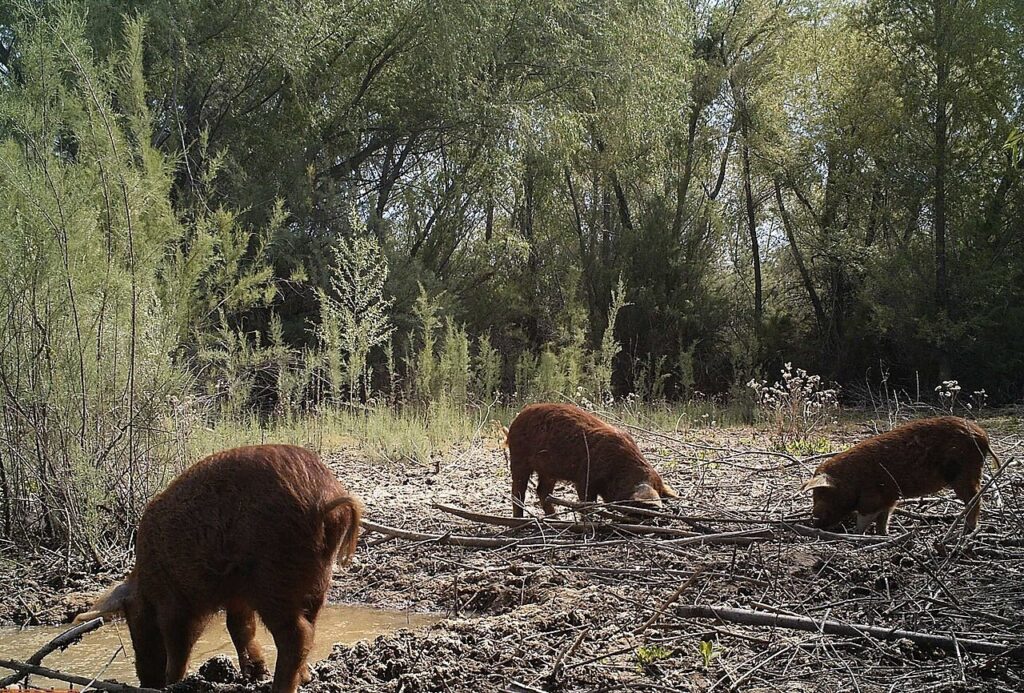
Hogs do not stop at county lines, and Fannin County shares Grayson’s eastern border. The NRCS project page for the Fannin, Lamar and Red River area describes a region of Blackland Prairie and timberland drained by the Red River and Sulphur River basins, with Bois d’Arc Lake, Pat Mayse Lake and dozens of smaller reservoirs (NRCS project page).
According to that page, the partner there will:
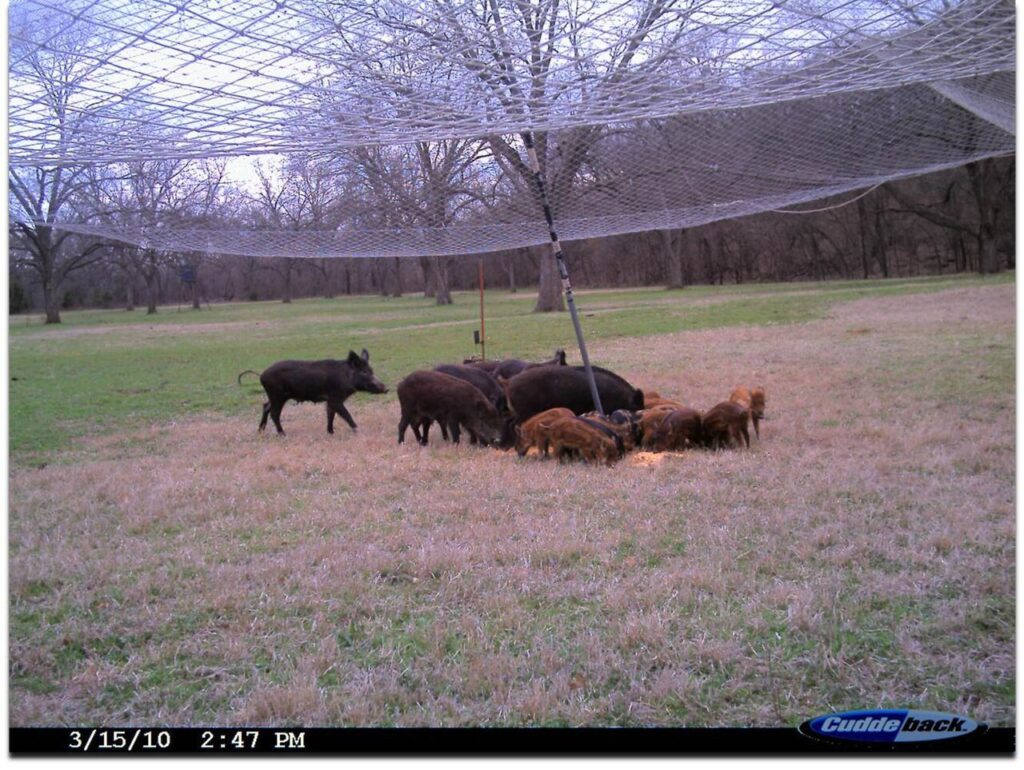
- run a trap loan program that delivers traps to landowners,
- help landowners set the traps and supply the first bait,
- track landowners’ time as their share of the project, and
- coordinate with APHIS Wildlife Services, which keeps operational control of hog removal work.
For Grayson County, that means two practical things. If you own land in Fannin County too, or farm across the line near Bells, Savoy or Whitewright, ask the Fannin County partners whether your acreage qualifies. And if you live in eastern Grayson County, a coordinated trapping push next door is worth watching, because a sounder that loses its food source in one place can move to the next. We could not find any public study that predicts what this project will do to hog activity on the Grayson side, so treat that as a reason to stay alert, not a forecast.
Where Grayson County landowners can get help now
Start with the Grayson County AgriLife Extension office. It is in the county courthouse at 100 W. Houston St. in Sherman (Courthouse A-G-1), phone (903) 813-4206, and its staff includes a County Extension Agent for Agriculture and Natural Resources (Grayson County AgriLife). Extension’s own guide says county agents are meant to help residents with wildlife damage and connect them with the right technical help (Texas Wildlife Services guide).
Texas Wildlife Services is the cooperative state-federal program, housed in Texas A&M AgriLife Extension, that handles wildlife damage. The same guide spells out how it works: advice, which the program calls technical assistance, is available to anyone, but hands-on trapping or removal by a local technician is generally limited to counties and landowner groups that cost-share in the program. Cities and counties with genuine human safety concerns can also get help. The program lists its district offices on its Who to Contact page. If you are not sure which district serves your land, the county Extension office can point you there.
For research-based how-to material, Texas A&M AgriLife’s feral hog management program covers hog biology, damage and control options for landowners and residents.
Texas rules for hunting and trapping feral hogs
Texas makes it easy to take hogs on private land, but a few rules still apply. From the Texas Parks and Wildlife Department regulations:
- No hunting license is needed to hunt feral hogs on private property with the landowner’s authorization.
- Hunter education requirements still apply.
- Trapping nongame animals such as feral hogs on private property is allowed under the state’s hunting rules.
- Moving or releasing live hogs is illegal unless it follows Texas Animal Health Commission (TAHC) rules. TAHC can be reached at (800) 550-8242.
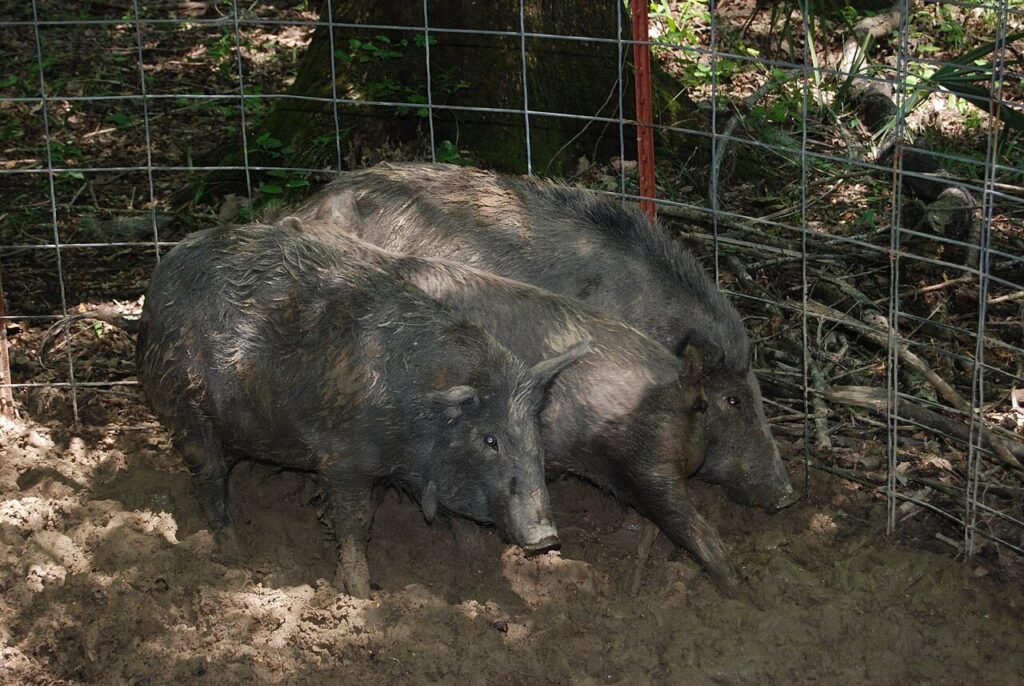
The TAHC rules are specific. Live trapped hogs may only go directly from where they were caught to a recognized slaughter facility, a TAHC-approved holding facility or an authorized hunting preserve. Trapped hogs waiting to be hauled to one of those places can be held in an escape-proof cage on the vehicle or trailer for up to seven days (TAHC swine movement summary). Driving a trapped hog to a friend’s place or turning it loose somewhere else is not on that list.
One more local note: hunting rules are not the same as city rules. If your property sits inside Gunter, Howe, Denison or another city’s limits, check that city’s ordinances before you shoot, and talk with the Extension office about trapping options instead.
What homeowners in new neighborhoods can do
You do not need 500 acres to have a hog problem. Our Gunter hog guide covers the rooted-up yards and roadside sightings along the growing edge of town. For homeowners, the practical steps are modest:
- Report repeated damage to your HOA or city, so they have a record if they decide to seek help.
- Call the Grayson County AgriLife office for advice before you buy a trap or hire a trapper.
- Do not feed wildlife or leave pet food outside overnight.
- Give hogs room. Drive slowly on rural roads after dark, when hogs often cross.
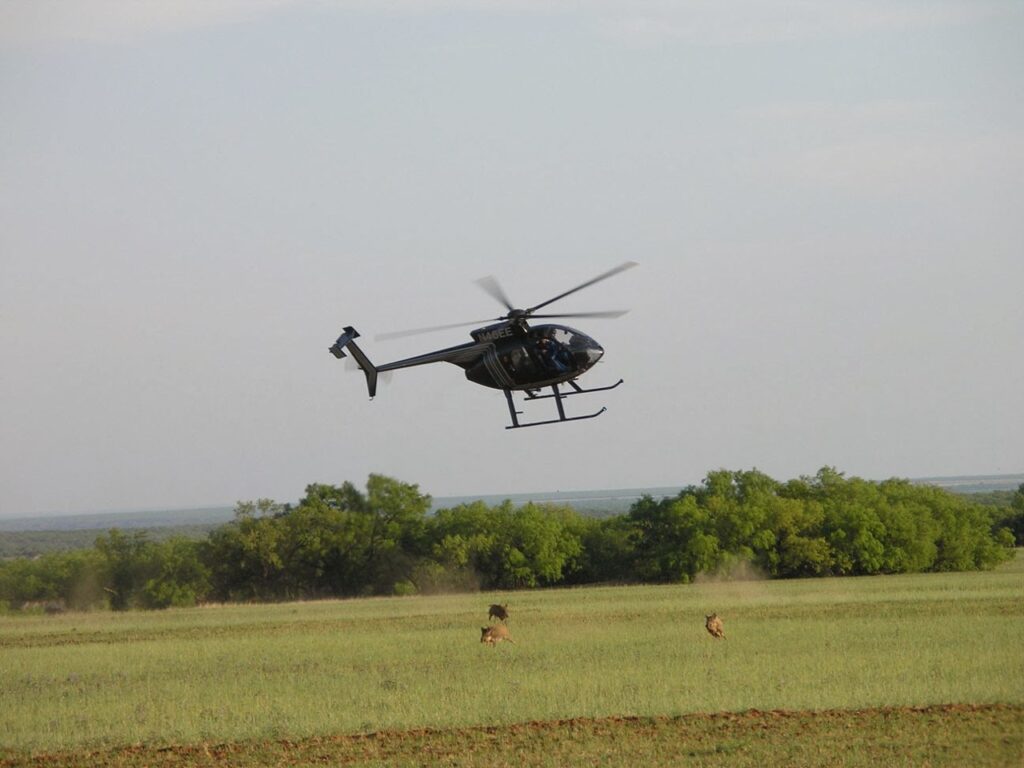
The USDA lists damage to plants, wildlife habitat, soil and water quality among the problems hogs cause, and notes that livestock and people can catch diseases carried by feral swine (NRCS Texas). Wear gloves if you ever handle a dead hog.
The bottom line
The new federal money will put traps and trained help on the ground in Fannin County and eight other Texas counties over the next five years. Grayson County is not one of them, so landowners here should keep using the tools already in place: the county AgriLife office, Texas Wildlife Services, and the state’s liberal private-land hunting and trapping rules. For more on rural life along the county line, see our country living in Grayson County guide and the Grayson County Line corridor guide.
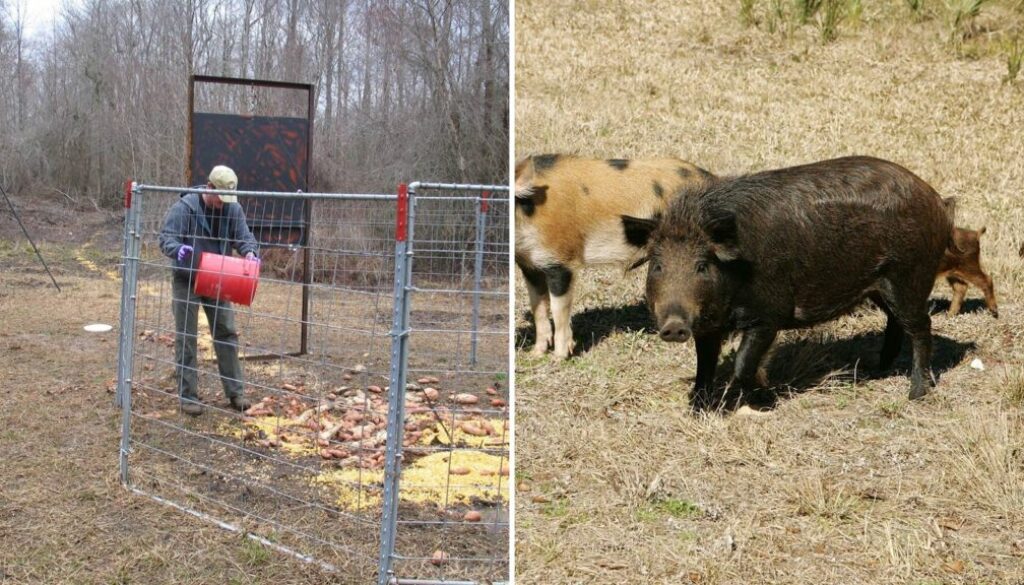
Header photos: a USDA Wildlife Services specialist baits a corral trap (USDA / Jay Cumbee via Wikimedia Commons), and a group of wild hogs (Steve Hillebrand, U.S. Fish and Wildlife Service, via Wikimedia Commons).