Hagerman Snow Geese 2026-27: When to Go and 5 Wildlife Drive Tips
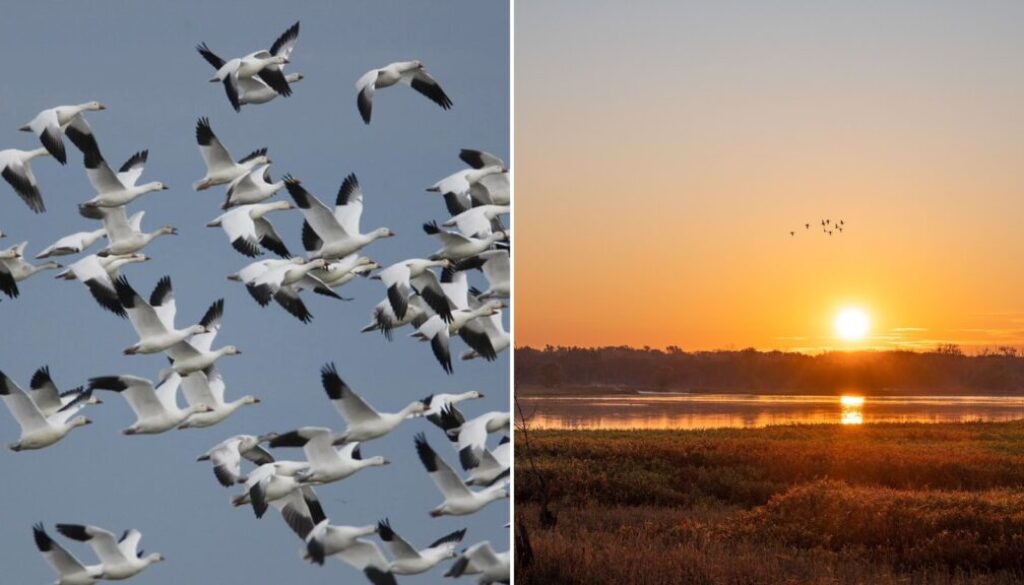
The best time to see Hagerman snow geese is from late November into February, when thousands of white geese winter at Hagerman National Wildlife Refuge on Lake Texoma, northwest of Sherman. Go early in the morning or in the hour or so before sunset, stay in your car on the refuge’s Wildlife Drive, and scan the wheat fields, marshes and lake edge. Entry is free, and the refuge’s roads and trails are open from dawn to dusk every day, according to the U.S. Fish & Wildlife Service.
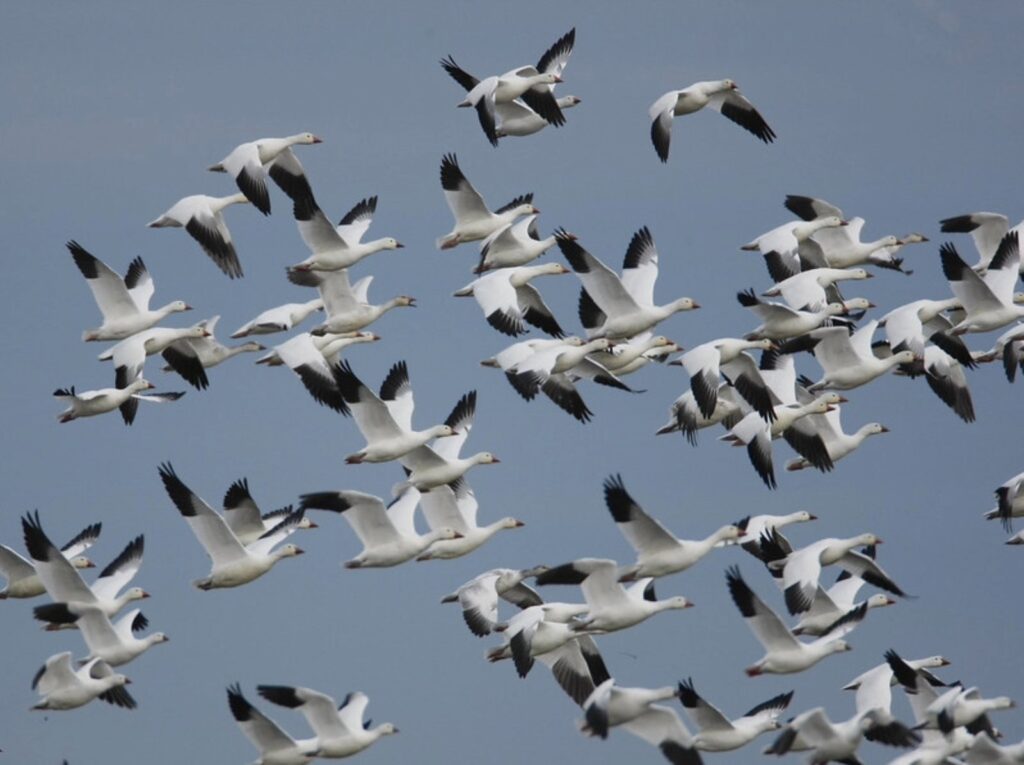
The flock is building right now. On Tuesday, Nov. 24, 2026, the volunteer team that runs the refuge’s weekly bird census counted about 1,500 white geese, most of them Ross’s geese. A week earlier, on Nov. 17, the same team counted 57 snow geese and 37 Ross’s geese. That jump makes Thanksgiving weekend a good time for a first look, and the weeks ahead are when, in recent winters, the flock has been at its biggest.
Hagerman snow geese at a glance
- Season: geese begin arriving in November and head north by late February, when the refuge’s winter wheat is gone, per the refuge’s species page
- Cost: free; there is no charge to visit
- Refuge hours: lands, roads and trails open daily from dawn to dusk; Wildlife Drive is open year-round during daylight hours
- Visitor center: Monday–Saturday 9 a.m.–4 p.m., Sunday 1–5 p.m.; closed Thanksgiving Day, Christmas Day and New Year’s Day
- Address: 6465 Refuge Road, Sherman, TX 75092; phone (903) 786-2826
- From Gunter: about 25 miles and roughly 40 minutes by car, based on an OpenStreetMap route to Refuge Road near the visitor center; allow extra time
- Status on Nov. 25, 2026: the refuge’s official page showed no closure alerts, and the Friends of Hagerman site listed only the Dec. 4–6 archery hunt closures covered below
When to go: what the counts show
The refuge says geese “by the thousands” start arriving in November from their northern breeding grounds and feed on grain grown on the refuge until about late February. The weekly census shows how that plays out from one winter to the next. This fall, the team logged 16 snow geese and 22 Ross’s geese on Nov. 10 before the jump to about 1,500 by Nov. 24.
For comparison, the 2024 census archive shows roughly 4,000 snow and Ross’s geese greeting the team on Wildlife Drive on Nov. 26, 2024, and estimates of 6,000 or more on each December census through Christmas Eve. On Dec. 3, 2024, the census team wrote that “now is the time to visit the refuge if you want to see a lot of geese up close.” By Dec. 31 of that year, they counted about 1,200 on the lake and noted that many geese may have been feeding on neighboring farm fields during the day.
The winter before that, the census estimated about 8,000 white geese on Jan. 21, 2024, and about 7,200 on Feb. 6, when the team wrote that the afternoon is usually the best time to see the most geese. By Feb. 20, about 2,000 remained.
No count is a promise, but December and January have been the safest bets for big flocks, and once the wheat runs low, an afternoon visit can pay off.
Snow geese or Ross’s geese?
The “white geese” in the census reports are two species, snow geese and Ross’s geese, and both are listed among the refuge’s featured birds. The Audubon field guide describes the Ross’s goose as a smaller, “pint-sized” relative of the snow goose, with a much shorter bill that lacks the black “grinning patch” a snow goose has, plus a rounder head. The two species sometimes hybridize, and like snow geese, Ross’s geese can occur in a dark “blue” form, though it is rarely seen; the census team reported at least three blue-phase Ross’s geese in mid-December 2024.
Look for greater white-fronted geese and Canada geese in the mix, too. On Nov. 24, the census team picked out a single cackling goose among the Canada geese across the road from Goose Point.
5 Wildlife Drive tips for seeing the geese
- Use your car as a blind. The refuge says birds used to slow traffic often stay put if you stay in your vehicle, but many will fly off if you get out for a closer look or a photo. Pull over safely, do not block gates, and keep to the refuge’s 20 mph speed limit.
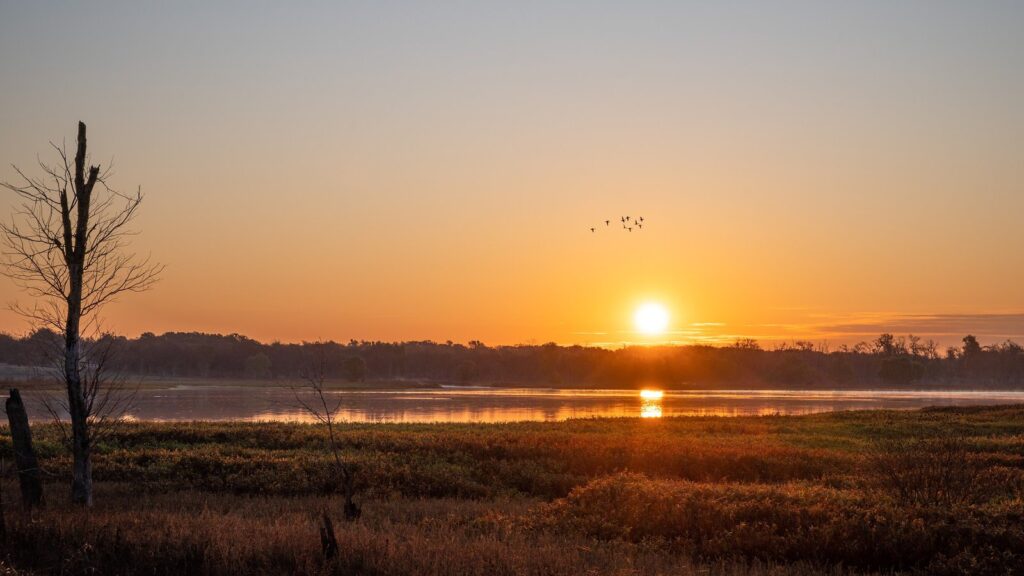
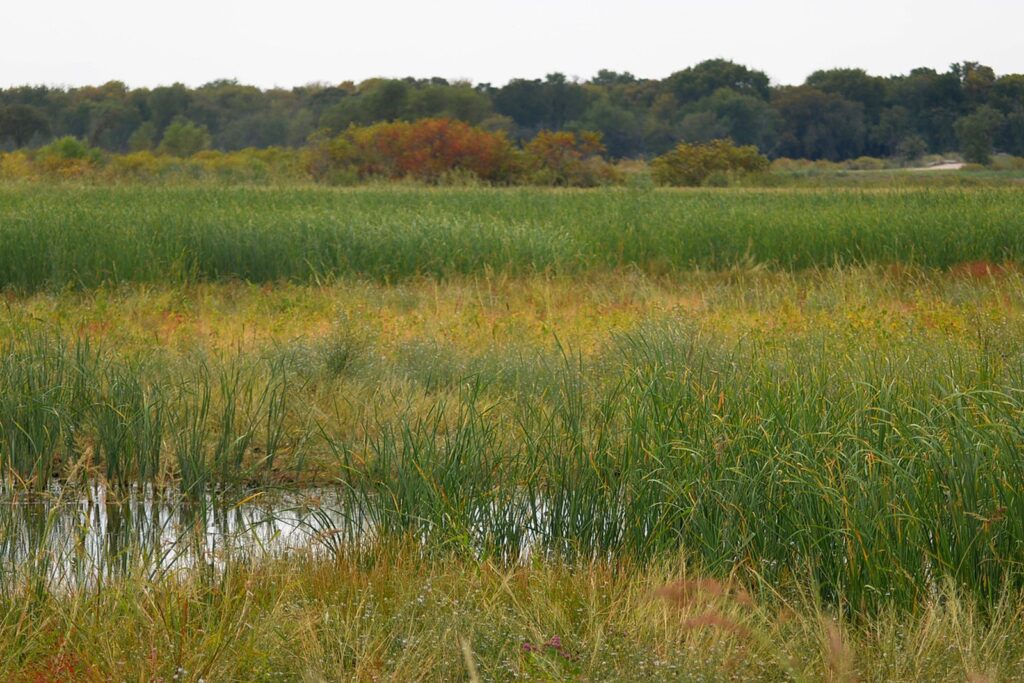
- Time it for soft light or gray skies. Mornings starting at sunrise and the hour or so before sunset are often best for wildlife. The refuge also says cloudy, overcast days are a perfect chance to see snow and Ross’s geese on the lake or in the marshes.
- Start at the visitor center if it is open. Staff and volunteers can help plan your route, you can borrow binoculars free of charge, and the list from the latest weekly bird survey is posted there. In winter, the refuge says, geese by the thousands gather in wheat fields visible from the visitor center.
- Go on a weekday if you can. Weekends usually bring more visitors; any non-holiday Monday through Friday means fewer people on the roads and trails.
- Check for water and closures before you leave. Wildlife Drive and several other roads sit in the Lake Texoma watershed and can flood. The refuge notes that flooding may occur when the lake rises above 621 feet. Call (903) 786-2826 or check the refuge page the morning you go.
For background along the way, the Friends of Hagerman offer a free self-guided audio auto tour that starts at the kiosk on Refuge Road across from the visitor center driveway.
Eagles, hunts and other things to know
Bald eagles are a bonus, not a guarantee. The refuge says they are often spotted in winter from Wildlife Drive or Bennett Lane, especially near the Big Mineral Day Use Area. The census team reported a pair hunting on Nov. 17 and two bald eagles on Nov. 24, but sightings vary day to day.
Plan around the archery-only deer hunt on Friday through Sunday, Dec. 4–6. The Friends of Hagerman say the Harris Creek, Big Mineral and Sandy units will be closed for the hunt, while the Raasch and Haller’s Haven trails stay open. The refuge says Wildlife Drive and at least one trail remain open during these hunts; if you plan to visit that weekend, call ahead.
- Dogs: welcome on a leash; not allowed in buildings or refuge waters, per the Friends’ refuge FAQ
- Drones: prohibited on all national wildlife refuges
- Restrooms: inside the visitor center, plus outdoor restrooms at the Big Mineral, Goode and Sandy day-use areas
- What to bring: warm layers, water, snacks and binoculars; the refuge suggests checking the forecast for ZIP code 75092
Guided options this weekend and next
If you would rather let a volunteer do the driving, the Friends of Hagerman run free 90-minute Wildlife Explorer tram tours, weather permitting. Their events calendar lists tours at 2 p.m. on Saturday, Nov. 28, Sunday, Dec. 6, and Saturday, Dec. 12. Seats are limited, so register ahead and arrive 15 minutes early at the visitor center.
Early risers can join the free Little Sit sunrise bird count on Saturday, Dec. 5, starting 30 minutes before sunrise at H Pad, inside the refuge, where leaders bring spotting scopes. The Second Saturday Bird Walk follows on Dec. 12 at 8 a.m. from the visitor center.
For more on the refuge’s year-round programs, see our Hagerman National Wildlife Refuge events guide.
Make it a day: Eisenhower State Park
Lake Texoma’s Eisenhower State Park, at 50 Park Road 20 in Denison, pairs well with a morning at the refuge. Texas Parks and Wildlife lists entry at $5 per adult per day, with children 12 and under free, and recommends reserving day passes online because the park often reaches capacity. The park’s alerts page says to use Exit 72 off US 75 because of road construction, and that trails close in wet conditions.
Our list of Grayson County’s best-kept secrets for nature lovers has more places to explore, and our Gunter Thanksgiving weekend guide rounds up lights, tree farms and Small Business Saturday stops for the rest of the holiday. For the bigger picture of life along the county line, start with our Grayson County Line guide.